Let's be clear. If you processed anything high‑risk in 2025 — IPTV, replicas, subscription apps, coaching, nutraceuticals, AI tools, digital products, or grey‑area SaaS — you witnessed a systemic breakdown. The signs were impossible to miss: silent freezes, middle‑of‑the‑night "risk review" emails, merchant accounts terminated without notice, PSPs holding six‑figure balances hostage, major processors such as Stripe banning entire clusters, Airwallex shutting corridors overnight, Rapyd withdrawing from whole countries, and Checkout.com abandoning verticals they had only just onboarded. This was not simple difficulty — it was open warfare.
Most merchants walked in blind, trusting empty assurances: "Your MCC is fine," "We understand your model," "Your risk is acceptable," "You're within thresholds." Meanwhile, processors were absorbing massive six‑figure VAMP fines from Visa — deducted straight from settlements — and merchants bore the cost through freezes, delayed payouts, and abrupt bans.
This article is written from inside the trenches — managing master accounts, routing thousands of transactions daily, challenging acquirers through legal channels, and extracting funds from hostile EMI accounts. None of this is theoretical. It is the survival playbook.

What Actually Happened in 2025 (The Truth PSPs Won't Admit)
2025 was not about "increased compliance." It was about acquirer panic. Visa's updated VAMP (Visa Acquirer Monitoring Program) framework hit with such force that acquirers began:
- Shutting down entire MCC ranges.
- Rejecting traffic at the BIN level.
- Cutting per‑MID volume limits by 40–70%.
- Declining any "unrecognised" transaction patterns automatically.
- Penalising volume spikes as potential laundering.
- Forcing PSPs to freeze merchant funds as "risk collateral."
The fines were severe. One EU acquirer absorbed a €2.8 million VAMP penalty in a single quarter. A mid‑sized PSP required emergency funding after Visa clawed back a quarter's margin. That fear cascaded downward: when acquirers become frightened, PSPs turn aggressive, and merchants become expendable.
The Real Reason for Freezes (It Was Never About You)
Processors froze merchants in 2025 because they were terrified of Visa — not because of individual merchant metrics. Even with chargebacks sitting at 0.7%, clean KYC documentation, and steady volume, accounts were frozen. The reasons were systemic:
- Portfolio‑wide exposure risk.
- Acquirer‑level panic.
- VAMP penalties triggered by MCC behaviour.
- Clustering of "high‑risk" patterns across their portfolio.
- AI‑driven flagging of geographic or BIN anomalies.
- Acquirer pressure to cut volume per MID.
More often than not, merchants were punished because another business under the same acquirer tripped a red flag. The processor did not freeze you specifically — they froze everyone to protect themselves.
2026: The Full‑Scale Restructuring
2025 was the warning shot. 2026 is the execution phase. Card networks are deploying:
- Entity graph analysis.
- Device fingerprint clustering.
- Descriptor behaviour linking.
- Geo‑pattern and "portfolio contamination" scoring.
- BIN distress monitoring.
- MCC inconsistency tracking.
This means that even if your metrics are clean, processing in a similar pattern or vertical as a risky merchant through the same acquirer can get you flagged. Expect:
- A 30–50% reduction in tolerance for new merchants.
- Instant auto‑flags driven by cluster patterns.
- Real‑time acquirer dashboards controlling MID closures.
- Non‑negotiable velocity limits.
- PSPs aggressively dumping "non‑core" verticals.
Relying on a single processor, a single descriptor, or a single geography is no longer viable — it is effectively self‑destruction.
Routing: The Difference Between Survival and Failure
Most merchants assume routing simply means "if Stripe declines, try another PSP." That is panic switching. Genuine routing is a pre‑planned, rule‑based orchestration layer that controls risk exposure before processors even see it.

Why Single‑PSP Dependence Is Fatal
You expose your business to that processor's VAMP thresholds, portfolio contamination, internal politics, AI triggers, and "risk mood swings." A single flag and the relationship is over.
What Real Routing Looks Like
- BIN‑Based Routing: Direct US debit, US credit, EU cards, UK cards, and LATAM cards to the processors most tolerant of each type.
- GEO‑Based Routing: Send French, German, Canadian, or Brazilian traffic to processors best equipped for each region's specific risk behaviours.
- Time‑Based Routing: Avoid processing high‑risk volume during peak fraud windows (e.g., 11 PM – 3 AM local time).
- Descriptor Rotation: Use multiple billing descriptors across PSPs to break pattern‑linking algorithms.
- Transaction Weighting: Distribute volume strategically so every processor stays "hungry" rather than hitting its internal risk capacity.
Case Study: The 4 AM Save
A replica merchant with climbing chargebacks was facing imminent termination. At 4 AM the routing was flipped: US debit diverted to a backup PSP, UK credit shifted to Airwallex, EU volume rerouted to a safe corridor, the descriptor was rotated, and velocity was reduced by 12%. Within 72 hours chargebacks fell 22%, the termination was rescinded, and the merchant survived.
Freeze Extraction: How to Get Funds Released Early

PSPs freeze funds to protect themselves — but freezes are not permanent. In 2025, early releases were forced by targeting processor weaknesses:
- Regulatory obligations and settlement duties.
- Breach of proportionality and contractual SLAs.
- Unlawful hold periods and absence of evidence.
- Misuse of VAMP as a blanket justification.
Having legal counsel on retainer — ready to escalate by citing the processor's licensing authority, applicable regulatory frameworks, and legal precedent — is what forces action. Most freezes were precautionary in nature and collapsed under formal scrutiny.
Chargebacks: The Real Enemy Is Pattern Clustering
Visa cares less about an isolated 0.9% chargeback rate and more about whether your patterns match a known risky cluster. If your dispute language, descriptor usage, BIN distribution, or timing resembles that of a recognised fraud ring or high‑risk group, you will be flagged. Chargebacks exist in clusters, not in isolation.
Crypto Off‑Ramping: Reality vs. Internet Fantasy
Most online guides are fiction. High‑risk merchants cannot rely on Binance P2P, Revolut, or mainstream "compliant" off‑ramps at scale without triggering instant bans. Real infrastructure is required.
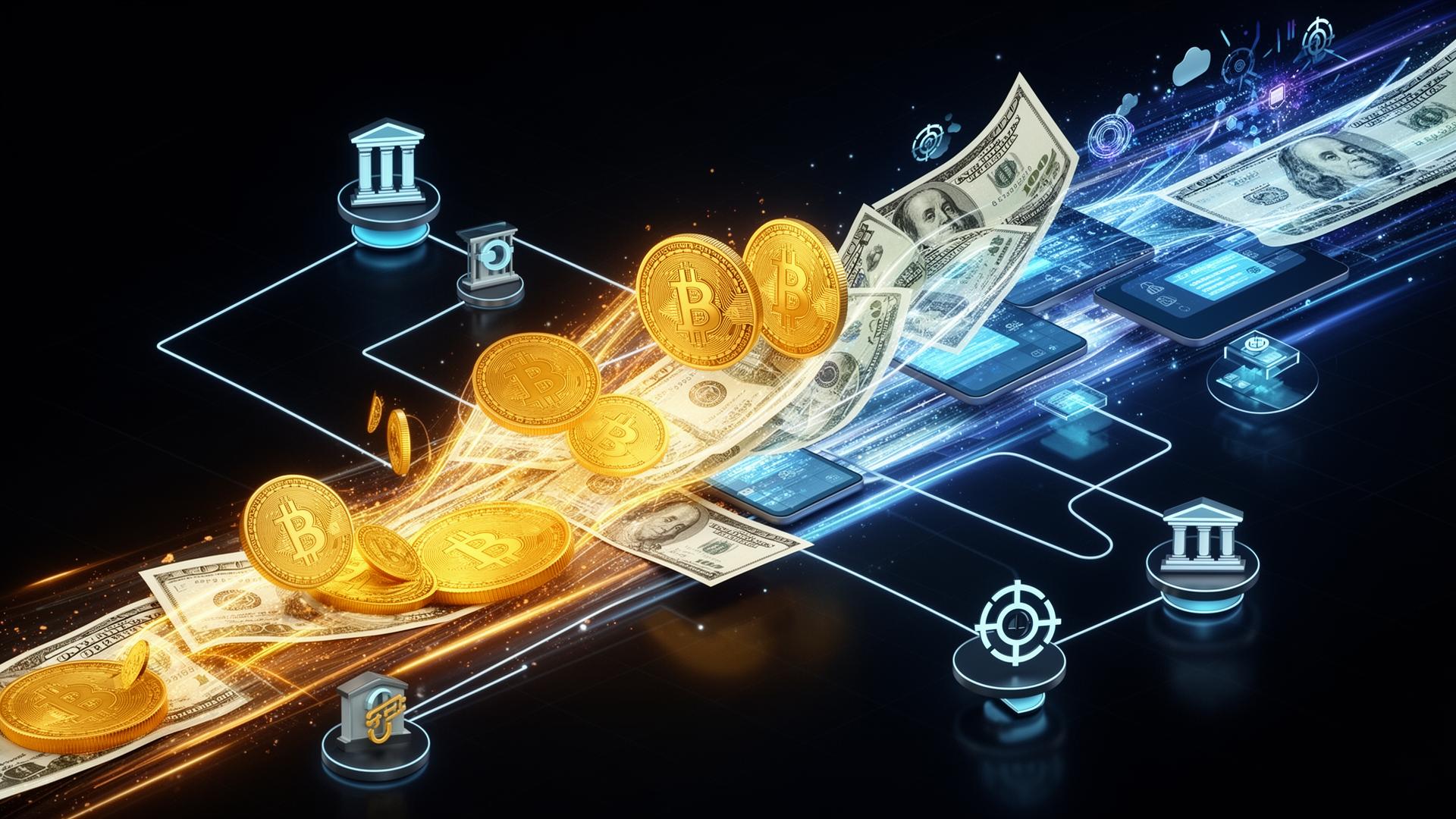
The Real‑World Off‑Ramp Playbook
- Structure: Use a business entity (UAE FZCO, HK Ltd, UK LLP) — never a personal wallet.
- Convert: Use institutional OTC desks rather than retail exchange accounts.
- Narrative: Move fiat to business EMI or bank accounts with clean settlement descriptions ("consulting services," "software licensing" — never "crypto off‑ramp").
- Disperse: Split large sums across multiple IBANs (ten transfers, ten accounts, three entities) over 30+ days.
- Rotate: Cycle jurisdictions monthly (EU, UAE, HK, UK) to avoid cumulative risk flags.
Case Study: The $3.5 M Off‑Ramp
A client moved $3.5 million in USDT using institutional OTC, settled into a Hong Kong multi‑currency account, split the fiat across five IBANs, backed every flow with invoices, staggered volume over 19 days, then redistributed to EU entities. The result: zero flags, zero freezes.
Merchant Archetypes: Who Survives 2026
The Survivors
- The Router: Uses three to six PSPs, rotates descriptors, splits traffic by geography and BIN.
- The Invisible Merchant: Processes behind master accounts, VAMP‑proof by design.
- The Structure Guy: Multi‑entity, multi‑IBAN, multi‑jurisdiction. No single point of failure.
- The Data‑Driven Merchant: Understands peak chargeback hours, BIN failure rates, geographic behaviour, and PSP fatigue.
- The Operator With Legal Teeth: Lawyers on retainer. PSPs think twice before acting.
The Vulnerable (Won't Make It to July 2026)
- The Single‑PSP Loyalist: One freeze away from ruin.
- The "I Don't Need Routing" Merchant: Naïve and fully exposed.
- The Overgrown Merchant: Scaled too fast, triggered acquirer panic.
- The Single‑Entity Operator: One company, one regulator, one acquirer.
- The One‑Descriptor Merchant: Easy to pattern‑match and ban.
Processor Psychology: How PSPs Actually Think
PSPs are not partners. They are risk managers who will sacrifice a merchant to avoid a €500k Visa fine.
What PSPs Like
- Predictable, steady volume.
- Low refund ratios.
- Diversified traffic and merchant portfolios.
- Minimal cardholder complaints.
- A stable geographic mix.
What PSPs Fear
- Volume spikes.
- Homogeneous transaction patterns.
- Geographic clustering.
- Subscription trial / rebill traffic.
- Heavy MasterCard or French card volume.
- Chargeback clusters.
Rules for Managing Your PSP Relationships
- Never let a single PSP see more than 25–40% of your total volume.
- Keep them "hungry" — below their internal pain threshold.
- Automate refunds to reduce noise.
- Change descriptors periodically.
- Use aggregators to obscure your true vertical.
- Stagger risk across jurisdictions.
- Share only what helps your position.
- Never scale faster than your PSP's risk tolerance.
The Bottom Line: Adapt or Get Left Behind
2025 laid bare a fundamental truth: the acquiring ecosystem cannot handle high‑risk, does not understand it, and will not be held accountable for the damage it inflicts. 2026 will be a culling.
Only merchants who master intelligent routing, aggregation, acquirer psychology, structured off‑ramping, multi‑entity operations, freeze extraction, and pattern‑breaking will preserve their cash flow, liquidity, and sanity.
This playbook is the lived reality of building payment rails, challenging freezes, and safeguarding businesses while processors tried to bury them. To survive 2026, internalise it. To scale in 2026, execute it. Everything else is noise.
Need Help Navigating High‑Risk Payments?
UniqPay specialises in intelligent routing, multi‑PSP orchestration, and freeze recovery for high‑risk merchants. Get in touch today.
Contact Us